Real-time backend and API development in Node.js and TypeScript
- Typical timeline
- 3–6 weeks
- Deliverables
- 8
- Updated
- 2026-10-05
Our real-time backend and API development work, in Node.js and TypeScript, covers the server that stores your app's data, checks what each user is allowed to do, and pushes changes to the phone and the admin dashboard as they happen. The largest one we have built is the backend of Escore, a live esports platform, for the Saudi company Rov Group, over a year of work from August 2025 to August 2026.
Mahmoud Hamdy designed and built that backend and the Next.js admin dashboard on top of it. Mohamed Magdy led the Flutter app that consumes it. The app is live on Google Play and the App Store with more than 5,000 registered users.
Sixteen modules in one process: the Escore backend
Escore runs as a single Node.js, Express and TypeScript process organized into sixteen separate modules: tournaments and brackets, matches, teams, team and player rankings, news, transfers, authentication and roles, and more. Each module owns its routes, controllers, services and data models.
We chose a modular monolith over microservices on purpose. A small team gains nothing from operating and monitoring a fleet of services, and clean module boundaries mean any one of them can be pulled out later if load calls for it.
Data lives in MongoDB through Mongoose. Esports data is nested and uneven: a team holds players, a tournament holds stages and matches, a match holds events and stats. Documents fit that shape better than tables. The API runs alongside MongoDB and Redis under Docker Compose on DigitalOcean.
Why live scores go over WebSocket, not polling
A live score that arrives a minute late is not live. Polling, where the app asks the server every few seconds whether anything changed, wastes most requests when nothing did and still lags when something does.
In Escore the app and the dashboard hold a persistent Socket.IO connection, and the server pushes score updates, bracket changes and notifications the moment they occur. Socket.IO rooms scope each broadcast to one tournament or one match, so a fan following a single game does not receive updates for every other game in progress.
Three data providers behind one API
Match data comes from specialist providers. Mahmoud evaluated three of them, PandaScore, GRID and Abios, and integrated all three. Scheduled jobs poll each provider at configurable intervals, normalize the different response formats into one, and store the result in MongoDB.
The app and the dashboard never call a provider directly; they only read from the Escore API. Swapping or adding a provider is backend work that does not touch the app already in the stores.
Roles, tokens and a dashboard on the same API
Sign-in uses short-lived JWT access tokens with encrypted refresh tokens, and a role layer guards every route. Escore has five roles: super admin, admin, editor, team manager and viewer.
The dashboard editors use to run tournaments, matches, rankings and news calls the same API as the mobile app. Business rules are written once, so the dashboard and the app cannot drift apart.
Payload down 65%, latency down 54%
Many Escore users are on slow networks and low-end Android phones. On the app side, Mohamed reworked how the app integrates with the API and how it serializes JSON, which cut the data payload by 65% and API response latency by 54%, and screens load faster as a result.
The same approach in other projects
For Ihkam, a platform for Quran memorizers at ihkamquran.com, Mahmoud used PostgreSQL on Neon with Drizzle ORM. The correct answer never reaches the browser before the user submits, so it cannot be read out of the page.
Bagour Delivery is Mahmoud's own food delivery platform for the town of Bagour in Menoufia: a Node.js, TypeScript and MongoDB backend that dispatches orders in real time over Socket.IO between customer, driver, restaurant and admin, with Paymob for payments. It is still in development and has not launched.
Outside client work, Mahmoud has had 119 pull requests merged into 24 open-source projects, among them helmet, express-validator, mongoose, nanoid and zod, libraries that many Express backends depend on. Each one passed review by that project's maintainers.
When you need real-time backend and API development, and how long it takes
If you already have an app that lacks a backend or a real-time layer, we add it in 3 to 6 weeks, with documentation your developers can work from. If you are starting from nothing, the backend is part of a fixed-scope first release of 6 to 10 weeks, together with the mobile app and the admin dashboard, and you get an installable build every week.
We are two engineers in Menoufia, Egypt, working remotely for clients in Egypt and the Gulf. On backend work you talk directly to Mahmoud, who writes it.
- Typical timeline
- 3–6 weeks
- Tools we use
- 12
- Projects
- 6
What you get
- A Node.js, Express and TypeScript backend split into modules, each with its own routes, logic and data models
- A documented REST API that the app and the admin dashboard both use
- A real-time layer over WebSocket (Socket.IO), with rooms so each broadcast reaches only the people following that event
- JWT sign-in and role-based access
- A MongoDB or PostgreSQL database, chosen by the shape of your data
- Integrations with the outside services you depend on: data providers, a payment gateway, a store platform
- A Docker setup and documentation your own developers can pick up
- Source code and server accounts in your name from day one
Tools we use
- Node.js
- Express
- TypeScript
- WebSocket
- Socket.IO
- MongoDB
- Mongoose
- PostgreSQL
- Drizzle ORM
- Redis
- JWT
- Docker
Typical timeline
3 to 6 weeks to add a backend or a real-time layer to an existing app
6 to 10 weeks when the backend is part of a full first release with the app and the admin dashboard.
Projects where we did this
- Projects
- 6
Mobile app, 2025
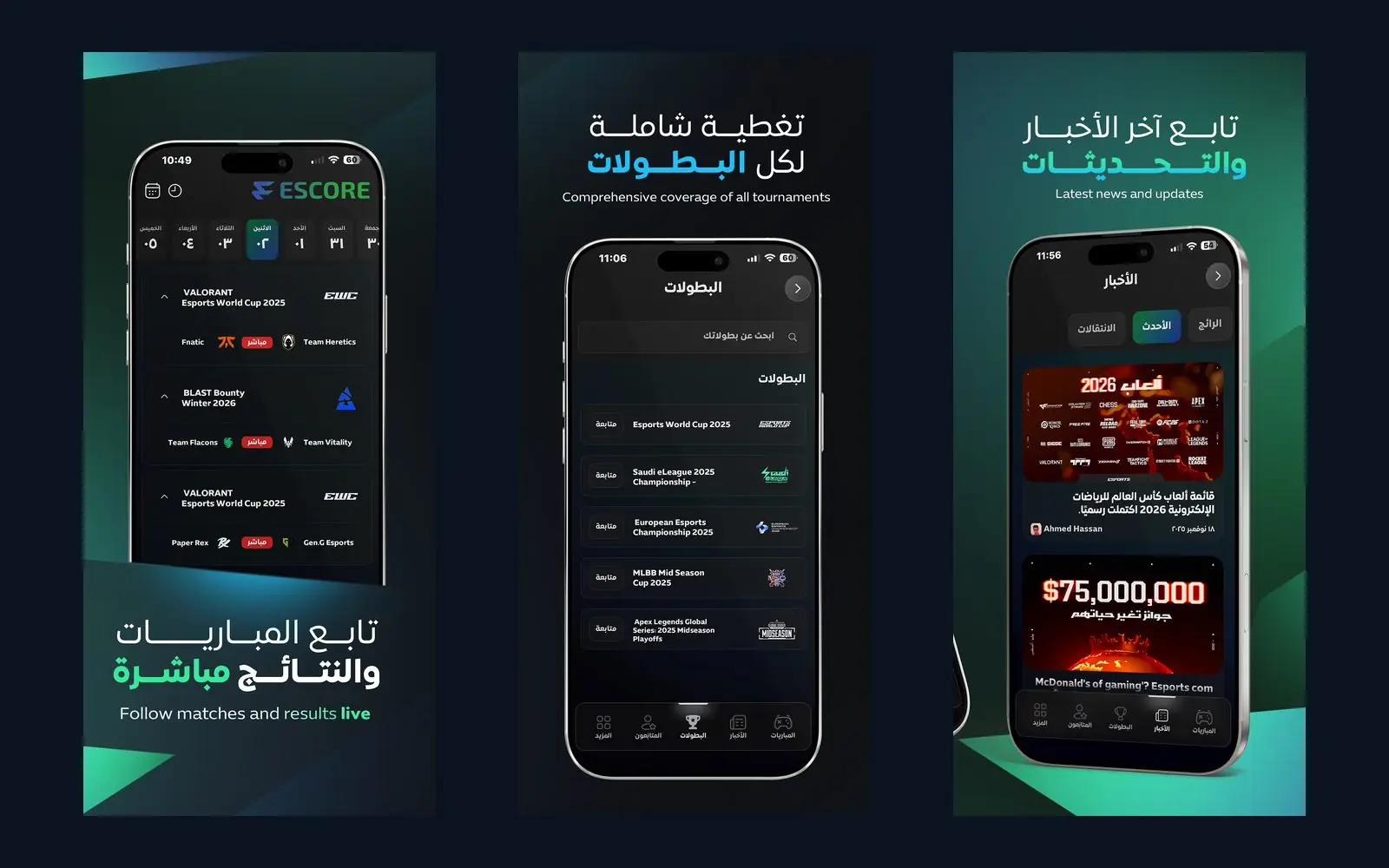
Escore
A live esports platform for the MENA region: scores, tournament brackets, rankings and news in Arabic and English, on iOS, Android and the web, with an admin dashboard for the editors.
- Flutter
- Dart
- Node.js
- Express
Website, 2026
Ihkam
An Arabic web platform for people who have memorized the Quran. It finds exactly which near-identical verses a memorizer mixes up, shows them side by side with the difference highlighted, and schedules daily review until they stick.
- Next.js
- React
- TypeScript
- Tailwind CSS
Mobile app, 2025
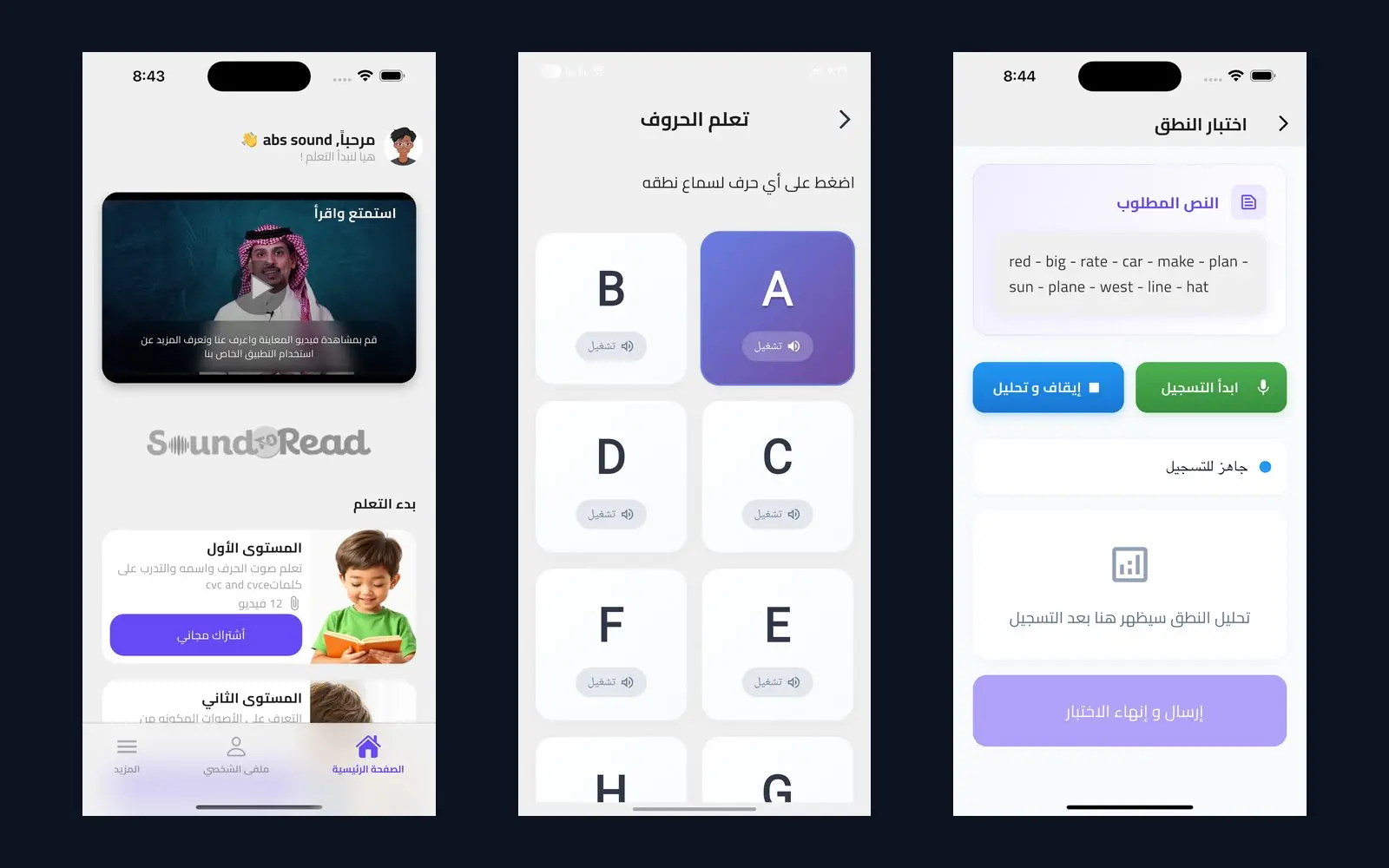
Sound to Read
A phonics app that teaches children aged 6 to 12 to read English, from letter sounds to fluent sentences, with native-speaker audio and progress reports for parents. Live on Google Play and the App Store.
- Flutter
- Dart
- Dio
- REST APIs
Mobile app
Saudi Host
A travel platform that connects visitors to Saudi Arabia with local tour guides, with separate screens and permissions for each role. Not launched yet.
- Flutter
- Dart
- GoRouter
Mobile app, 2025
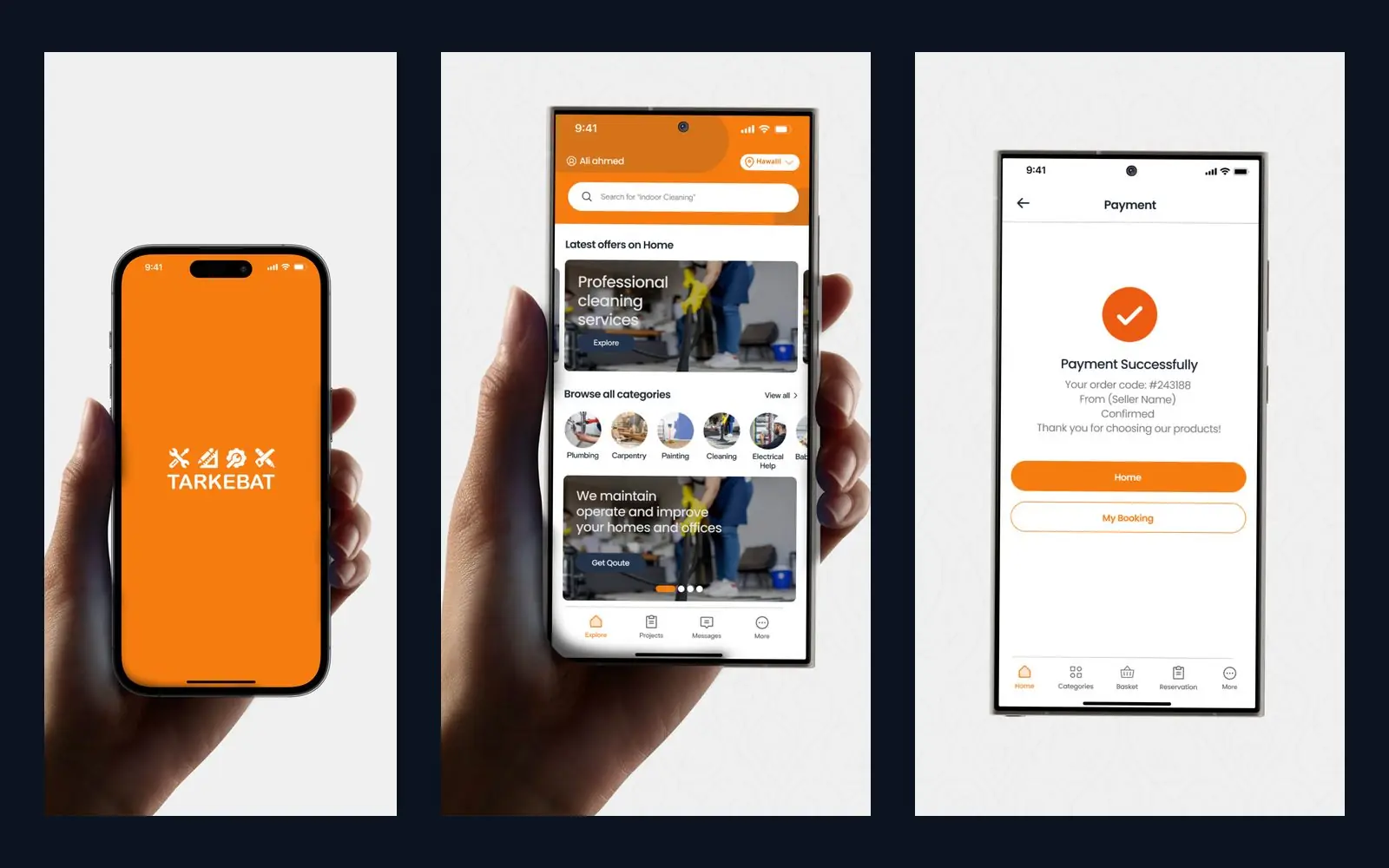
Tarkibat
A services marketplace that connects property owners with tradespeople for construction, painting and electrical work. Live on Google Play and the App Store.
- Flutter
- Dart
- BLoC / Cubit
- GoRouter
Website
Bagour Delivery
A food delivery platform for the town of Bagour in Menoufia, with customer, driver, restaurant and admin apps and real-time order dispatch. In development.
- Node.js
- TypeScript
- Socket.IO
- MongoDB

Why clients trust us
You own the code and accounts
The source code repository, the Google Play and App Store developer accounts, and the server, cloud and domain accounts are in your name from day one. We work in them with access you grant, and they stay with you if we stop working together.
An NDA before you explain
We sign a non-disclosure agreement before you explain the idea, not after the first meeting.
30 days of free fixes
For 30 days after launch we fix, free of charge, any bug in what we delivered against the agreed scope. New features, scope changes, and problems caused by third-party services or by someone else's changes are not covered.
Optional monthly support plan
A set number of engineering days each month for fixes, store updates, performance work, keeping an eye on production and new features when needed, with priorities agreed at the start of each month. It is paid, and the price is on request.
Questions about this service
- Questions
- 6
Can you build just the backend for an app we already have?
Yes. That is our dashboard or backend add-on track, 3 to 6 weeks. We build the API or the real-time layer in Node.js and TypeScript and hand it over with documentation your developers can continue from.
Do you use MongoDB or PostgreSQL?
Both, depending on your data. Escore uses MongoDB because tournament and match data is nested and uneven; Ihkam uses PostgreSQL on Neon with Drizzle ORM. Data held together by strict relations usually belongs in PostgreSQL.
Does every app need WebSocket?
No. We use it when data changes while the user is looking at the screen, like live scores in Escore or dispatching orders to drivers in Bagour Delivery. Screens that are read and closed are fine on a plain REST API, which is simpler to run.
Can you connect the backend to outside services?
Yes. For Escore we evaluated three data providers, PandaScore, GRID and Abios, and put all three behind one API. Our IAI assistant reads products and orders through the Salla API, and Bagour Delivery, still in development, uses Paymob for payments.
Who owns the code and the servers?
You do, from day one. The source code, the server accounts and the databases are in your name, not ours.
What happens after handover?
For 30 days after launch we fix, free of charge, any bug in what we delivered against the agreed scope. After that you can take an optional monthly support plan covering fixes, performance work and keeping an eye on production; the price is on request.
Related reading
Building a live score app backend: WebSocket, rooms and three data providers in Escore
How I built the backend behind Escore's live esports scores: 16 Node.js and TypeScript modules, Socket.IO rooms per match, and three data providers behind one API.
7 min read
Tell us what you want to build
Message us on WhatsApp or send a short brief, and we reply with a proposed scope and a rough timeline. If you want a rough duration first, try the estimator.