Flutter app development company for Android and iOS
- Typical timeline
- 6–10 weeks
- Deliverables
- 7
- Updated
- 2026-10-05
We are a Flutter app development company of two engineers, Mohamed Magdy and Mahmoud Hamdy, working remotely from Menoufia, Egypt, for clients in Egypt and the Gulf. Mohamed writes the Flutter app; Mahmoud builds the backend and the admin dashboard behind it. Three of the apps we worked on are live on both Google Play and the App Store: Escore, Sound to Read and Tarkibat.
One codebase for both stores, from a small Flutter app development company
Flutter draws its own interface instead of wrapping each platform's native widgets, so the app looks and behaves the same on Android and iPhone. In practice that means every feature is written and tested once, and a bug fix ships to both platforms in the same release.
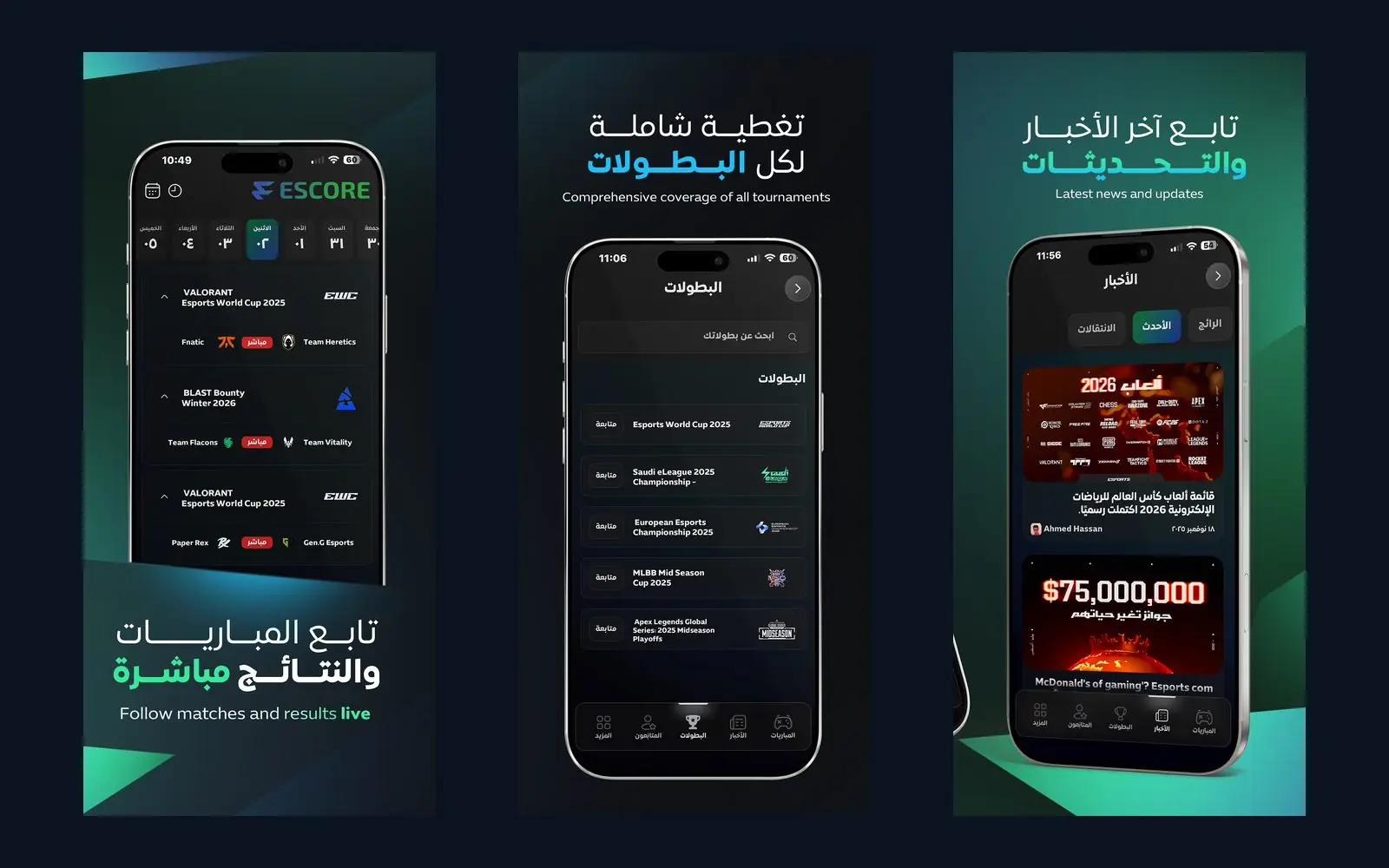
Escore shows why that matters. It has more than 5,000 registered users, 74% of them on iOS and 26% on Android, all served by one Flutter codebase.
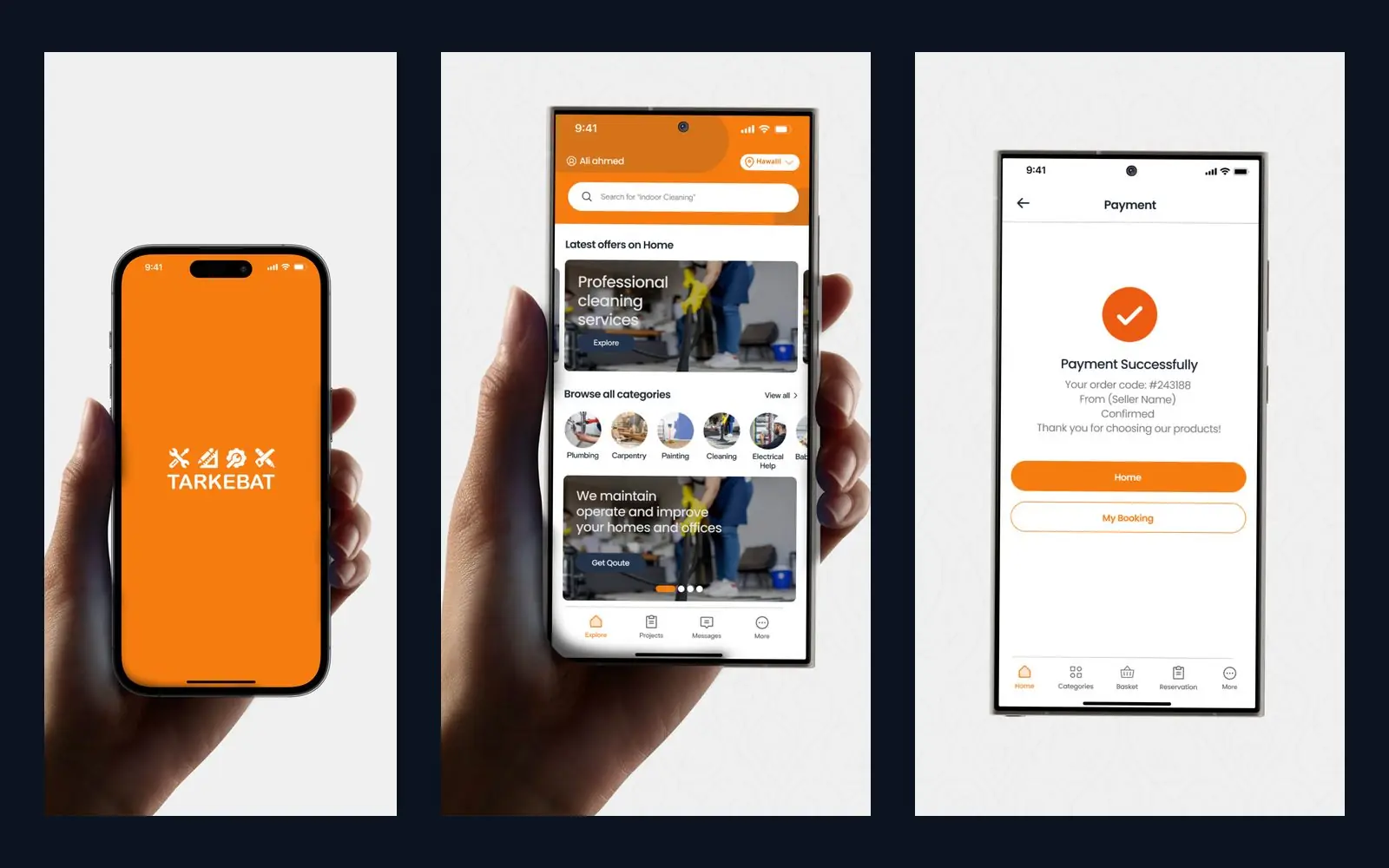
We structure the code with Clean Architecture, keep screen logic out of the widgets with BLoC and Cubit, and route with GoRouter. That is how Mohamed built Tarkibat, a marketplace connecting property owners with tradespeople, for PureSoft. The payoff comes later: when the API changes, one layer changes and the screens stay put.
What Escore taught us about slow networks
Escore is a live esports platform we spent a year building for Rov Group, a Saudi company. Its fans follow matches as they happen, often on slow mobile networks and low-end Android phones.
Mohamed reworked the app's API integration with Dio and its JSON serialization. The data payload dropped by 65% and API response latency by 54%, so screens load faster on a weak connection, which was the problem users actually felt.
He then profiled the app with Flutter DevTools on low-end Android devices, removed jank frames and unnecessary widget rebuilds, and cut memory use and startup time. A cheap phone shows problems a developer's phone hides.
Live scores and animated tournament brackets arrive over WebSocket and Dart Streams. The latest data is cached on the device with Hive and SharedPreferences, so the app opens with something on screen before the network comes back.
Arabic and English in the same app
In Escore, users switch language inside the running app and the whole interface flips to right-to-left without a restart. The theme system covers light and dark mode in both languages.
Flutter mirrors most widgets on its own when the locale is Arabic. The work is in whatever was written for one direction: arrow icons, padding set as left and right instead of start and end, and Arabic strings that run longer or shorter than the English. So every screen gets checked in both languages before we hand it over.
Sign-in and notifications
Mohamed wired Firebase Authentication to Google Sign-In and Sign in with Apple for Escore, and those two options account for 90% of registrations. Most people on a phone would rather not invent another password, so that button comes first.
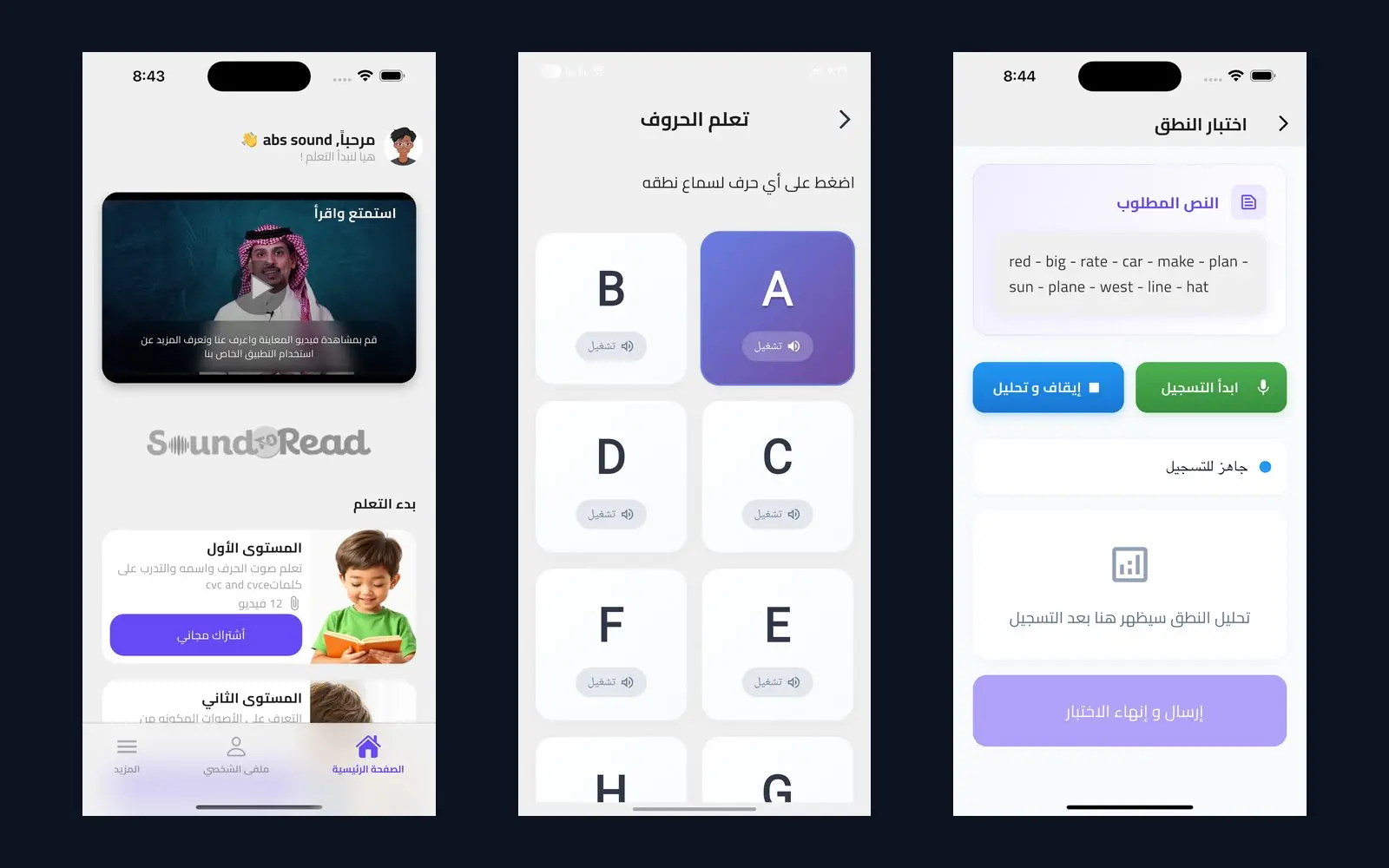
Notifications go through Firebase Cloud Messaging. Sound to Read, an app that teaches children aged 6 to 12 to read English, sends parents lesson reminders and progress alerts, and keeps lessons on the device so it works offline.
Getting through store review
For Sound to Read, a project for a Saudi client, Mohamed ran the whole release: Play Console and App Store Connect, TestFlight distribution, app signing, and kids-category review on both stores. That category has stricter rules on data collection, ads and links out of the app, so the app has to be designed around them from the first screen.
We publish from your own developer account on each store. The app, the store listings and the code are yours from day one.
How a project runs and how long it takes
On the fixed-scope MVP track we agree on a short written brief and a fixed feature list, then build the app, its backend and the admin dashboard in 6 to 10 weeks. Every week you get a build to install on your own phone.
The number of user roles moves the timeline more than anything else. For Saudi Host, a travel platform that connects visitors to Saudi Arabia with local guides, Mohamed built role-based access with separate routes and permissions per role on GoRouter; every extra role means more screens and more tests. Real-time features, third-party integrations and whether the backend already exists move it too.
After launch we fix bugs in what we delivered, against the agreed scope, free for 30 days. If you want us to stay on, there is an optional paid monthly support plan covering fixes, store updates and performance work; the price is on request.
- Typical timeline
- 6–10 weeks
- Tools we use
- 13
- Projects
- 4
What you get
- One Flutter app for Android and iOS, in Arabic and English, with the whole interface mirrored for right-to-left
- Sign-in with Google or Apple through Firebase, and push notifications through Firebase Cloud Messaging
- Local storage with Hive and SharedPreferences for the screens that must open without a connection
- An installable build every week, on iPhone through TestFlight
- Release on Google Play and the App Store under your own developer accounts
- The full source code, in a repository you own from day one
- Free fixes for 30 days after launch for bugs in what we delivered against the agreed scope
Tools we use
- Flutter
- Dart
- BLoC / Cubit
- GoRouter
- Dio
- WebSocket
- Firebase Auth
- Firebase Cloud Messaging
- Firestore
- Hive
- SharedPreferences
- Flutter DevTools
- TestFlight
Typical timeline
A fixed-scope MVP in 6 to 10 weeks: the app, its backend and an admin dashboard, with an installable build every week.
A dashboard or backend add-on: 3 to 6 weeks.
Projects where we did this
- Projects
- 4
Mobile app, 2025
Escore
A live esports platform for the MENA region: scores, tournament brackets, rankings and news in Arabic and English, on iOS, Android and the web, with an admin dashboard for the editors.
- Flutter
- Dart
- Node.js
- Express
Mobile app, 2025
Sound to Read
A phonics app that teaches children aged 6 to 12 to read English, from letter sounds to fluent sentences, with native-speaker audio and progress reports for parents. Live on Google Play and the App Store.
- Flutter
- Dart
- Dio
- REST APIs
Mobile app
Saudi Host
A travel platform that connects visitors to Saudi Arabia with local tour guides, with separate screens and permissions for each role. Not launched yet.
- Flutter
- Dart
- GoRouter
Mobile app, 2025
Tarkibat
A services marketplace that connects property owners with tradespeople for construction, painting and electrical work. Live on Google Play and the App Store.
- Flutter
- Dart
- BLoC / Cubit
- GoRouter
Why clients trust us
You own the code and accounts
The source code repository, the Google Play and App Store developer accounts, and the server, cloud and domain accounts are in your name from day one. We work in them with access you grant, and they stay with you if we stop working together.
An NDA before you explain
We sign a non-disclosure agreement before you explain the idea, not after the first meeting.
30 days of free fixes
For 30 days after launch we fix, free of charge, any bug in what we delivered against the agreed scope. New features, scope changes, and problems caused by third-party services or by someone else's changes are not covered.
Optional monthly support plan
A set number of engineering days each month for fixes, store updates, performance work, keeping an eye on production and new features when needed, with priorities agreed at the start of each month. It is paid, and the price is on request.
Questions about this service
- Questions
- 7
Is Flutter a good choice for an app on both iPhone and Android?
Yes. Escore serves more than 5,000 registered users, 74% of them on iOS, from one Flutter codebase, and it is live on Google Play and the App Store. One codebase means every feature and every fix reaches both platforms in the same release.
How long does it take to build a mobile app?
A fixed-scope first release takes 6 to 10 weeks and includes the app, its backend and an admin dashboard. The number of user roles, real-time features, third-party integrations and whether a backend already exists can stretch it. You get an installable build every week.
Whose account is the app published under, and who owns the code?
Yours. The app goes out from your own Google Play and App Store developer accounts, and the source code sits in a repository you own from day one. We handle the release steps themselves: signing, TestFlight distribution and submitting for review.
Can the app work without an internet connection?
Yes, for the screens that need it. Escore keeps the latest data on the device with Hive and SharedPreferences, and Sound to Read stores lessons so a child can keep learning offline. We agree in the written brief which parts must work without a network.
Do you build the backend and the admin dashboard too?
Yes. Mahmoud Hamdy builds the backend in Node.js and TypeScript and the dashboard in Next.js, and the app and dashboard share one API, as in Escore. If you already have a backend, we connect the app to it.
Can you integrate payment gateways such as Mada or Apple Pay?
We can integrate a gateway, but none of our released apps takes payments yet. The only gateway in our work so far is Paymob in Bagour Delivery, which is still in development. We say so plainly before we agree on scope.
I already have a Flutter app in the stores. Can you take it over?
Yes, on the monthly retainer: a set number of engineering days each month for new features, fixes, store updates and performance work, month to month with a three-month minimum. We set the priorities with you at the start of each month.
Related reading
App development cost in Saudi Arabia and Egypt, and what really drives it
What pushes an app's cost up or down, from projects we built, next to the price ranges other agencies publish, each with its source and date.
8 min read
Flutter Arabic RTL support: what a bilingual esports app taught me
Flutter Arabic RTL support from ARB files to icons, mixed-direction scores and fonts, from building Escore, an esports app that switches between Arabic and English at runtime.
5 min read
Tell us what you want to build
Message us on WhatsApp or send a short brief, and we reply with a proposed scope and a rough timeline. If you want a rough duration first, try the estimator.